
Best Bridal Hairstyles for Outdoor Weddings in Italy
Outdoor weddings in Italy are beautiful, but they're tough on hair. The heat, the wind off the lake, the hours spent moving between gardens and terraces all test a hairstyle in ways that studio inspiration never shows you. The best bridal hairstyles for outdoor Italian weddings are the ones that still look freshly done when the photographer captures the last dance at midnight.

What Makes Outdoor Weddings in Italy Uniquely Challenging for Bridal Hair
Before diving into specific styles, it helps to understand what Italian outdoor conditions actually do to hair. This context shapes every recommendation that follows.
Heat and humidity. Italian summers are warm. Southern regions and coastal venues along the Amalfi Coast, in Puglia, and in Sardinia can push past 35 degrees with significant humidity. Heat loosens curl, flattens volume, and causes the scalp to produce oil that can make the roots look limp by mid-afternoon. Humidity expands the hair shaft, creating frizz and disrupting smooth finishes.
Wind. Lakeside venues at Como, Maggiore, and Garda often have a consistent breeze that intensifies in the afternoon. Hilltop venues in Tuscany catch wind from across the valley. Coastal venues get sea breezes. Wind pulls pieces loose, displaces veils, and turns a carefully placed tendril into a chaotic strand across the face.
Duration. Outdoor Italian weddings run long. The ceremony starts in the late afternoon, the aperitivo flows on the terrace, dinner happens in a garden or courtyard, and the party stretches past midnight. A hairstyle needs to perform for 8 to 12 hours, not 2.
Transitions between settings. Most outdoor Italian weddings aren't entirely outdoors. The bride moves between a shaded getting-ready room, an open-air ceremony space, a sunlit garden for aperitivo, and possibly an indoor or covered reception area for the evening. The style needs to look appropriate and hold its shape across all of these.
A bridal hairstylist who works at Italian outdoor venues regularly builds all of this into their approach before picking up a single pin.

Textured Low Buns That Hold Their Shape in Italian Heat
The textured low bun is the most consistently reliable bridal hairstyle for outdoor weddings in Italy. There's a reason it remains the most requested style year after year, and it isn't because it's trendy. It's because it works.
A low bun sits at the nape of the neck, which keeps the weight of the hair off the shoulders and the back of the neck where heat builds up during outdoor celebrations. It's structurally secure, meaning wind moves around it rather than through it. And because the bun itself is anchored with pins, it doesn't rely on product hold alone to maintain its shape across a long day.
The 2026 version of this style is textured rather than slick. Softly pulled sections, deliberate looseness at the crown, and face-framing pieces that add movement and personality without compromising the structure underneath. The texture makes it look modern and effortless while the underlying construction ensures it stays put from ceremony to midnight.
For outdoor Italian weddings specifically, the stylist will typically add invisible structural support that the camera never sees. Pin placement follows the natural stress points of the style. Product layering starts with heat protection and ends with a flexible-hold finishing spray that doesn't create a crunchy or shellacked look. The result is a bun that looks soft and romantic from the outside but is engineered to survive whatever the Italian afternoon throws at it.
This style pairs beautifully with strapless and off-shoulder dresses, which are popular choices for warm-weather Italian weddings. It also works well with veils, hair accessories, and fresh flowers because the clean line of the nape gives the accessory room to sit without visual competition.

Soft Waves and Blowouts That Survive the Breeze
Down styles with soft waves are the second most popular request for Italian outdoor weddings. They're romantic, they photograph beautifully with the Italian landscape behind them, and they create the kind of effortless movement that suits the informal elegance of garden and countryside venues.
The challenge is obvious. Hair that's down is fully exposed to wind, heat, and humidity. It has no structural anchor. And over the course of a long day, waves loosen, volume drops, and the carefully cultivated "effortless" look becomes genuinely messy rather than intentionally undone.
For this style to work at an outdoor Italian wedding, the preparation has to be precise. The hair is set in rollers or waves and left to cool completely before the final brush-out, which locks in the curl pattern more deeply than a quick iron-and-go approach. Products are layered strategically. A texturising spray at the roots for volume that resists collapsing. A heat protectant before any hot tools. A humidity-resistant hold spray that controls frizz without weighing the hair down.
The stylist also builds in what we call controlled imperfection. Rather than creating a perfectly uniform wave pattern that any disruption will ruin, the style is designed with natural variation that absorbs the day's movement. A piece that shifts in the wind becomes part of the look rather than a flaw. This approach requires experience and confidence because the stylist is designing for how the hair will look four hours into the day, not just how it looks when she puts the brush down.
If you're set on wearing your hair down at an outdoor Italian wedding, a few honest considerations. Fine hair will lose curl faster in heat than thick hair. Very long hair catches more wind and requires more product to maintain shape. And wide landscape photos at venues with panoramic views will show every strand of displacement. Discuss these factors during your trial session and have the stylist photograph the look from multiple distances so you can see how it reads in the kind of shots your photographer will capture.

Half-Up Styles That Balance Romance and Practicality
The half-up, half-down style is having a major moment in bridal hair, and for outdoor weddings in Italy it hits the sweet spot between wanting hair down and needing it to stay out of the way.
The top section is swept back and secured with twists, braids, pins, or a combination. This anchors the style and keeps hair away from the face during the ceremony and formal portraits. The bottom section falls in soft waves or loose curls, creating the romantic movement that brides love in outdoor settings.
For Italian outdoor weddings, the half-up style offers several practical advantages. The secured top section is resistant to wind because it's pinned in place. The face stays clear for photos, even in breezy conditions. And if the lower section loses some curl through the day, the overall style still looks intentional because the structure is at the top.
This style also transitions well between the different phases of an Italian wedding. It looks polished enough for a formal ceremony at a villa, relaxed enough for aperitivo in the garden, and holds up through an evening of dancing. If the bride wants to add a veil for the ceremony and remove it for the reception, the half-up section provides a natural attachment point that doesn't require restructuring the entire style.
Modern variations in 2026 include incorporating small twists or micro braids into the pulled-back section for added texture, leaving soft curtain bangs or longer face-framing pieces out, and using a statement hair accessory at the gathering point as a focal piece.

Elegant Updos That Work for Formal Outdoor Italian Wedding Venues
Not every outdoor Italian wedding is a barefoot vineyard celebration. Some take place at grand estates, palazzo gardens, or formal terraces at venues like Villa Miani in Rome or historic villas on the Italian lakes. These settings call for a more structured updo that matches the formality of the surroundings.
The key for 2026 is that even formal updos have softened. The tight, heavily sprayed chignon of five years ago has given way to polished styles with intentional softness. A French twist with a few face-framing pieces released. A sculptural updo with gentle volume at the crown rather than a flat, pulled-back severity. A rolled bun with visible texture rather than a smooth, solid surface.
For outdoor settings, the formal updo has a structural advantage. It's completely secured, which means it's virtually windproof. It keeps the neck and shoulders clear, which is comfortable in heat. And it changes very little over the course of the day, which means the bride looks consistent in photos from the ceremony through to the reception.
The styling challenge is making a formal updo feel right in an outdoor setting. Under an open sky, surrounded by gardens and natural light, an overly stiff or architectural style can look out of place. The solution is in the finishing. A few softening details, a slight looseness, a warmth in the texture, make a formal updo feel like it belongs outdoors while maintaining the elegance the venue demands.

How Different Italian Regions Affect Your Hairstyle Choice
Italy is not one climate or one landscape. The region where you're getting married should directly influence which bridal hairstyle you choose.
The Italian Lakes. Como, Maggiore, and Garda are beautiful but breezy. The afternoon lake breeze is consistent from late spring through early autumn. Down styles need strong hold. Half-up styles perform well here because the secured section resists the wind while the lower hair moves with it naturally. Updos are the safest choice for brides who don't want to think about their hair at all once it's done.
Tuscany and Umbria. The countryside venues are typically warmer and drier than the lakes. Heat is the main challenge, not wind. Volume can flatten faster, and the scalp may produce more oil throughout the day. Textured buns and half-up styles work beautifully here. Down styles are possible with the right product strategy, especially for spring and autumn weddings when temperatures are moderate.
Rome. City weddings and villa celebrations in Rome combine urban heat with stunning architectural backdrops. Polished styles tend to photograph best against formal Roman settings. A sleek low bun or a refined half-up style suits the aesthetic better than loose beachy waves.
Amalfi Coast and Southern Italy. Coastal humidity is the primary factor. Hair expands, frizz increases, and curl patterns can shift unpredictably. Styles that embrace texture rather than fighting it perform best here. A textured bun, a half-up with natural movement, or controlled waves with anti-humidity product layering. Avoid any style that depends on a perfectly smooth or sleek finish because the coast won't cooperate.
Puglia and Sardinia. Similar coastal conditions as the Amalfi Coast, with the addition of stronger wind at exposed rural or clifftop venues. Updos and half-up styles are strongly recommended here. Loose hair catches the wind beautifully in one photo and covers the bride's face in the next.

The Products and Techniques That Make Outdoor Bridal Hair Last All Day
The style is only half the equation. What holds it in place for 8 to 12 hours at an outdoor Italian wedding is the product strategy underneath.
Professional bridal hairstylists working in Italy layer products in a specific sequence. A heat protectant before any hot tools. A texturising spray or mousse at the roots for grip and volume that resists collapse. A medium-hold spray during the styling process to lock in sections as they're built. And a flexible finishing spray at the end that controls flyaways and frizz without creating stiffness.
For humid conditions, anti-humidity sprays and serums are added to the product stack. These create a barrier that prevents moisture in the air from penetrating the hair shaft and disrupting the style. For very fine hair that tends to lose curl quickly, a stronger setting product is used during the initial curling or waving process.
The technique matters as much as the product. Pins are placed at structural stress points, not just decoratively. Curls are set with clips and allowed to cool completely before the final brush-out, which locks the pattern in for far longer than a quick style-and-go approach. And the stylist builds in natural movement so that any loosening over the course of the day integrates into the style rather than undermining it.
This level of product and technique knowledge comes from working at outdoor Italian weddings regularly. A stylist doing their first Italian wedding might use the same products they'd use in London or Chicago, not realising that those formulas underperform in Mediterranean conditions. An experienced team adjusts their entire kit based on the season, the region, and the specific venue.

Matching Your Bridal Hairstyle to Your Dress and Accessories
The hairstyle doesn't exist in isolation. It needs to work with the dress neckline, the veil or headpiece, and the overall aesthetic of the wedding.
Strapless and off-shoulder dresses. These expose the shoulders, neck, and collarbone. An updo or half-up style balances this by adding visual weight above the neckline. A down style can also work but tends to cover the shoulder detail of the dress, so consider whether you want the dress or the hair to be the focal point.
V-neck and plunging necklines. These draw the eye downward. A style with volume at the crown or sides balances the vertical line of the neckline. Soft waves falling forward over the shoulders can create a romantic frame for a deeper neckline.
High-neck and long-sleeve dresses. These pair naturally with updos and pulled-back styles that keep the overall silhouette clean. A busy down style with a high neckline can feel visually heavy.
Veils. If you're wearing a veil for the ceremony and removing it for the reception, the hairstyle needs to accommodate both versions. A half-up style or low bun gives the veil a clean attachment point and still looks complete once it's removed. Discuss this during the trial so the stylist designs the attachment to be invisible once the veil comes off.
Hair accessories. Combs, pins, crowns, and headbands should be integrated into the style from the planning stage, not added as an afterthought. Bring them to your trial session so the stylist can build around them.

What to Discuss With Your Stylist During the Trial for an Outdoor Wedding
Your trial is where the decision gets finalised. For an outdoor Italian wedding, the conversation should go beyond "I want this Pinterest photo."
Ask the stylist how the style will hold in the specific conditions of your venue and season. Ask what products they plan to use and whether those products are tested for outdoor Mediterranean conditions. Ask how the style will look after four hours, after six hours, after eight hours. Ask them to photograph the trial look in natural outdoor light so you can see how it reads in the conditions your photographer will be working in.
If you're including bridesmaids and mothers in the beauty schedule, discuss how the bridal party styles will coordinate with yours. The bridal party's hair should feel connected to the bride's look without matching it. A bride in a textured low bun might have her bridesmaids in half-up styles with a similar texture. A bride in soft waves might have her bridesmaids in looser, more casual versions of the same movement.
And discuss the team size needed for your group. Getting-ready spaces at outdoor Italian venues vary in size, and the morning timeline needs to account for each person's hair and makeup without anyone being rushed.
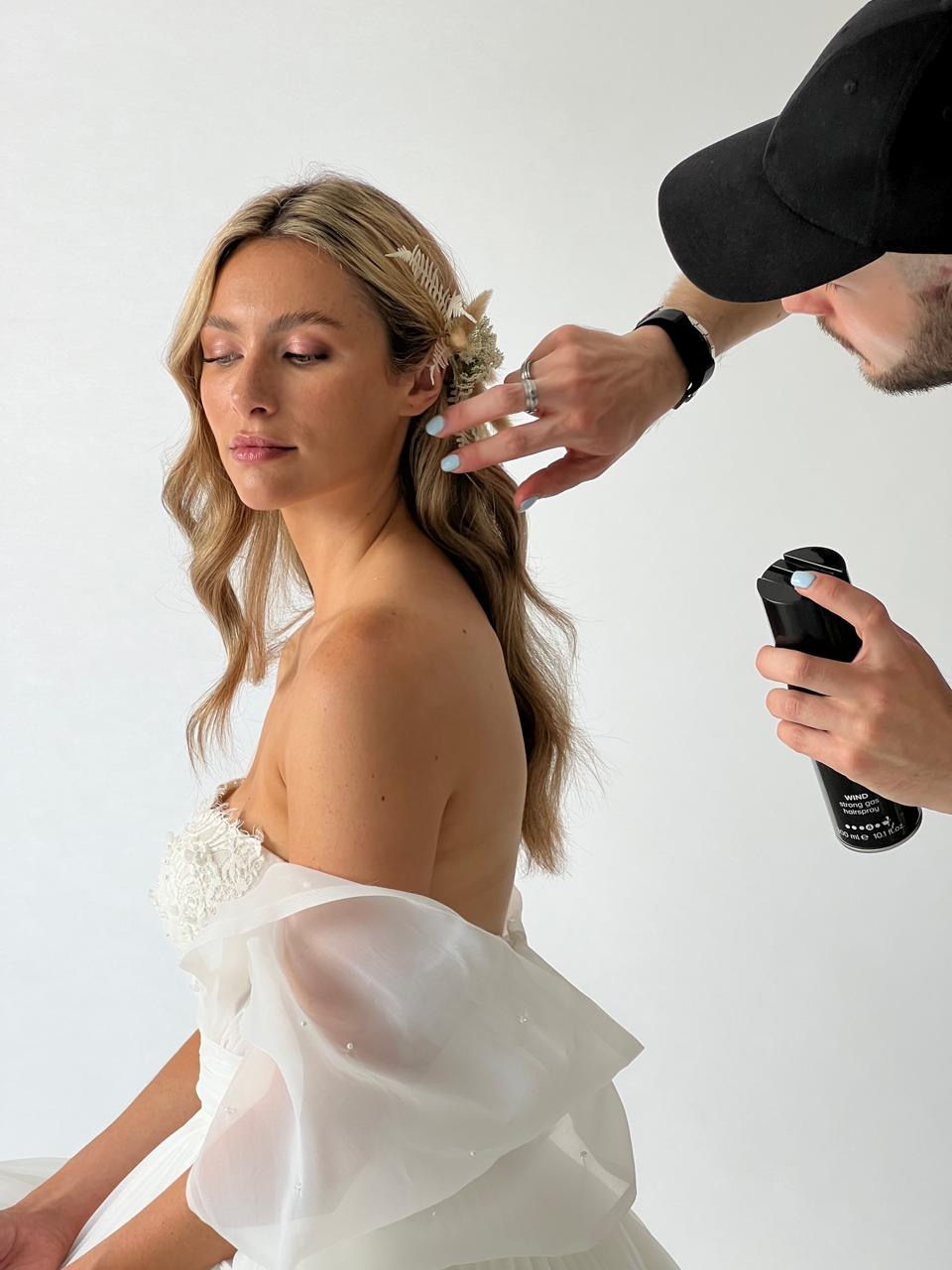
Book Your Bridal Hairstylist for an Outdoor Wedding in Italy
The right hairstyle for your outdoor Italian wedding is the one that makes you feel beautiful at the ceremony and still looks like it was just finished when you're dancing at midnight. Finding that balance between trend, practicality, and personal style is what a great bridal hairstylist does.
BLBS Management provides professional bridal hair and makeup for outdoor destination weddings across Lake Como, Tuscany, Rome, the Amalfi Coast, Lake Maggiore, Lake Garda, Milan, Puglia, Sardinia, and venues throughout Italy and Europe. Our stylists specialise in creating hairstyles that are built for real outdoor conditions, using products and techniques calibrated for the specific climate of your region and season. Every booking includes a trial session where we test the style in natural light and make sure it's designed to last your entire celebration.
Use our cost calculator to build a quote, explore our real wedding portfolio, or contact us to start planning your bridal hair.


Comments